What Is an Invoice? How Is It Issued?Differences Between E-Invoice and E-Archive Invoice
- Her Şeyin Ortasında

- Dec 13, 2025
- 4 min read
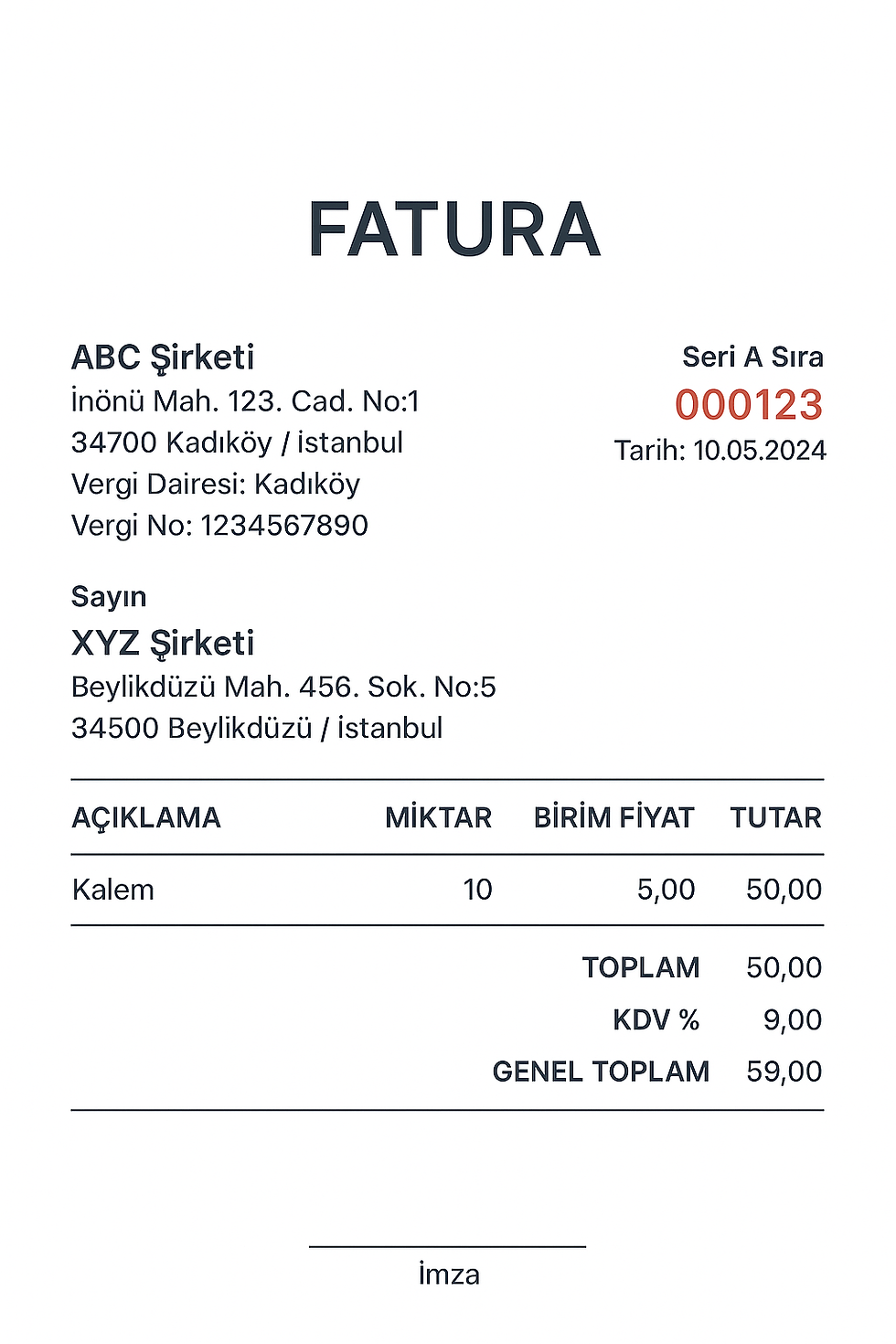
Moreover, invoices are not only part of business life; they also appear frequently in our daily lives. Whenever we shop online, purchase a service, or deal with accounting while growing our business, we inevitably encounter invoices.
So, what is an invoice? How is an invoice issued? What are the differences between an e-invoice and an e-archive invoice?If you are looking for answers to these questions, you are in the right place. Let’s examine them in detail together.
What Is an Invoice?
An invoice is an official document issued in exchange for goods sold or services provided. In other words, it is the written proof of a transaction. By issuing an invoice to the buyer, the seller records their income and ensures compliance with tax regulations.
The functions of an invoice are not limited to tracking income and expenses. It also:
Documents commercial transactions
Serves as evidence for tax authorities
Acts as an official document in case of disputes between parties
In short, an invoice is indispensable for trade.
What Are the Essential Elements of an Invoice?
An invoice must include certain mandatory information. These essential elements are:
Invoice date and number
Seller’s information (name/title, address, tax office, tax number)
Buyer’s information (name/title, address, tax office, tax number)
Description of the goods or services
Quantity and unit price
Total amount
VAT rate and calculated VAT
Grand total
Documents that do not include these elements cannot be considered valid invoices.
How Is an Invoice Issued?
One of the most common questions is: “How is an invoice issued?”
In the past, invoices were issued only through printed invoice books. Sellers would manually fill out paper invoices and deliver them to customers. Today, with technological advancements, digital invoicing systems have come to the forefront.
Steps to Issue an Invoice:
Obtain the buyer’s information after the sale or service
Calculate the quantity, unit price, and total amount of the goods or services
Add the VAT rate to determine the grand total
Assign the invoice number and date
Deliver the invoice to the buyer either in paper form or electronically
While paper invoices are still valid, the most commonly used systems today are e-invoices and e-archive invoices.
What Is an E-Invoice?
An e-invoice, one of the most important steps in digital transformation, is the electronic version of the traditional paper invoice.
What is an e-invoice?
It is an electronic invoice sent and received through the system established by the Revenue Administration (GİB)
It has the same legal validity as a paper invoice
Storage and archiving processes are much easier
Advantages of E-Invoices:
Prevents paper waste and is environmentally friendly
Eliminates the risk of losing invoices
Reaches the recipient much faster and more easily
Greatly simplifies accounting and financial advisory processes
Additionally, e-invoicing is mandatory for businesses exceeding certain turnover thresholds.
What Is an E-Archive Invoice?
An e-archive invoice is an electronic invoice issued to companies or individuals who are not e-invoice taxpayers.
What is an e-archive invoice?
Issued electronically instead of paper invoices
Can be sent to customers via email or delivered as a printed copy
Gains legal validity by being reported to the Revenue Administration
When Is an E-Archive Invoice Used?
In online sales
For invoices issued to businesses not registered in the e-invoice system
In sales made to end consumers
For e-commerce businesses, e-archive invoices are essential.
Differences Between E-Invoice and E-Archive Invoice
Many people ask, “What is the difference between an e-invoice and an e-archive invoice?” Here is the clearest answer:
Feature | E-Invoice | E-Archive Invoice |
Issued To | E-invoice taxpayers | Non e-invoice taxpayers and individuals |
Delivery Method | Through the GİB system | Via email or printed copy |
Mandatory Status | Mandatory based on turnover | Mandatory for e-commerce sales |
Legal Validity | Official document registered with GİB | Official document reported to GİB |
In summary:
If the buyer is an e-invoice taxpayer, an e-invoice is issued.
If the buyer is not a taxpayer or is an individual, an e-archive invoice is issued.
Why Are E-Invoices and E-Archive Invoices Important?
With digitalization in Türkiye, e-invoice systems play a major role in ensuring tax transparency and preventing the informal economy.
Thanks to e-invoices and e-archive invoices:
Unregistered transactions are reduced
Accounting processes become faster
Government tax audits become easier
Archiving costs for businesses are eliminated
Who Is Required to Use E-Invoices and E-Archive Invoices?
Each year, the Revenue Administration issues regulations that require businesses exceeding certain turnover limits to use e-invoices and e-archive invoices.
For example:
Businesses with annual turnover above the specified limit
Companies engaged in e-commerce
Businesses operating in certain sectors such as fuel, sugar, iron, and steel
In short, digitalization has become inevitable for all businesses.
Conclusion: Which Invoice Should You Use?
Now you know:
E-invoices are official electronic invoices used between businesses
E-archive invoices are electronic invoices issued to individuals or businesses that are not e-invoice taxpayers
If you want to grow your business, simplify accounting, and gain speed in official transactions, switching to e-invoices and e-archive invoices will be a major advantage.
Remember, issuing the correct invoice is important not only for compliance with tax regulations but also for building customer trust.
👉 Do you use e-invoices or e-archive invoices in your business? Share your experience in the comments and let’s discuss together.


Comments